In 2026, reach is a commodity, but attention is a currency. Many brands boast about millions of impressions, yet their “Buy Now” buttons remain untouched. If you are reaching 100,000 people but only ten are interacting, you aren’t running a community—you’re shouting into a void. For the modern business owner and the performance-driven manager, understanding the Engagement Rate (ER) is the difference between a vanity project and a viable sales engine.
Why Reach is a Vanity Metric
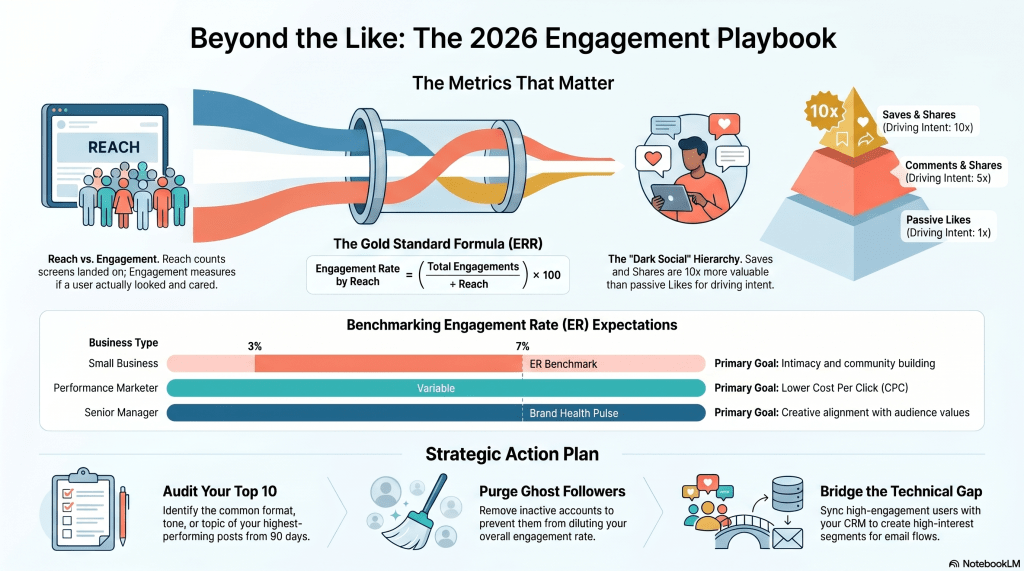
Reach tells you how many screens your content landed on; it doesn’t tell you if anyone actually looked at it. In an era of “infinite scroll,” a user can pass your ad in 0.5 seconds without a single brain cell firing.
The Formula for Reality
To truly analyze performance, we move beyond raw numbers and look at the ratio of actions to views. While there are various ways to calculate this, the Engagement Rate by Reach (ERR) remains the gold standard for gauging content resonance:
ERR = (Total Engagements ÷ Reach) x 100
Benchmarking for Success: Small Business vs. Enterprise
The ideal engagement rate isn’t universal. It shifts based on your industry and the size of your following.
- For the Small Business Owner: You have the Agility Advantage. Smaller audiences typically see higher engagement rates (often 3–7%). Your goal is intimacy and community building.
- For the Performance Marketer: Engagement is your signal for ad relevance. A high ER on a Meta or TikTok ad often leads to a lower Cost Per Click (CPC) and better auction placement.
- For the Senior Manager: ER is your Brand Health pulse. It proves that your creative team is producing content that actually aligns with your audience’s values, rather than just filling a calendar.
The Dark Social Theory
Here is the counter-intuitive truth: Your best engagement is likely invisible.
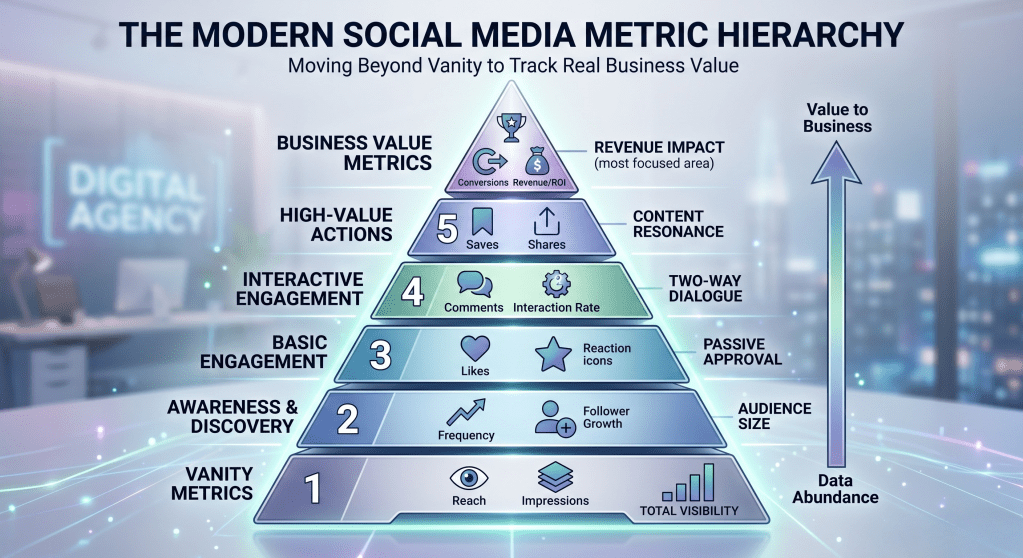
In the current landscape, Saves and Shares are significantly more valuable than Likes. A Like is a passive acknowledgment. A Save is an intent to revisit, and a Share is a personal recommendation. If your engagement rate is low on public comments but high on private shares, your content isn’t failing—it’s becoming a trusted resource in private circles. Don’t just optimize for the public feed; optimize for the Send/Share button.
Actionable Takeaways
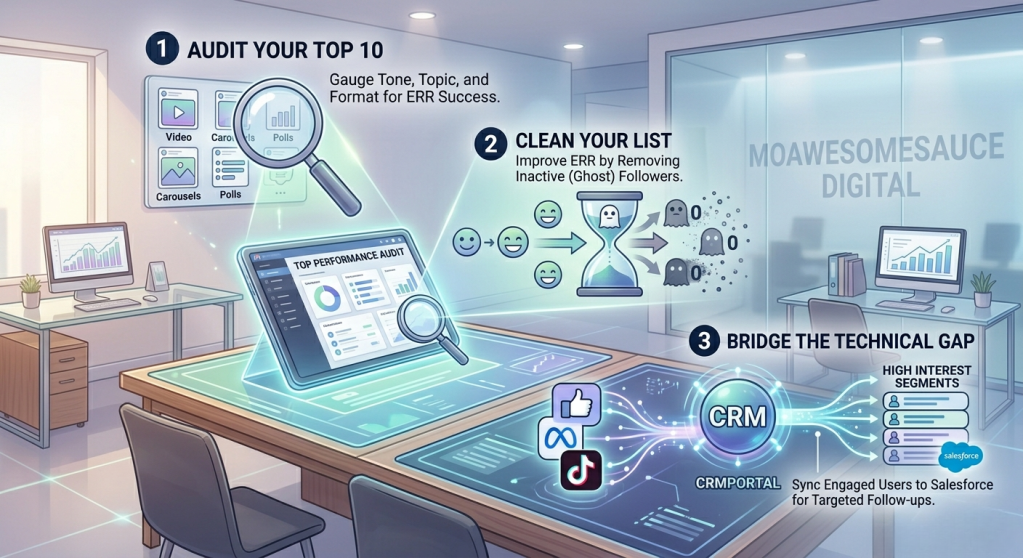
- Audit Your Top 10: Identify the posts with the highest ER over the last 90 days. What is the common thread? (Format, tone, or topic?)
- Clean Your List: For small business owners, Ghost Followers (inactive accounts) dilute your engagement rate. Focus on quality over quantity.
- Bridge the Technical Gap: Performance managers should ensure that high-engagement social content is synced with their CRM (like Salesforce). If a user engages frequently, they should be moved into a High Interest segment for targeted email flows.
Over to You: Join the Conversation
We’ve shown you why a Save or a Share is worth ten times more than a passive Like in today’s social algorithms—but every brand’s data tells a different story.
- For the business owners: Which social platform currently drives the highest real conversation and community for your brand?
- For the performance marketers: Have you started optimizing your ad creative specifically for Saves yet, or are you still relying on traditional click-through metrics?
Drop your thoughts, experiences, or disagreements in the comments below.
Let’s talk strategy!
 MUHAMMAD NASIR